Our Location
A-08-01, PJ8, 23, Jalan Barat,
Section 8, 46050, Petaling Jaya,
Selangor, Malaysia
Phone: (+63) 555 1212
Fax: (+63) 555 0100

A-08-01, PJ8, 23, Jalan Barat,
Section 8, 46050, Petaling Jaya,
Selangor, Malaysia
Phone: (+63) 555 1212
Fax: (+63) 555 0100
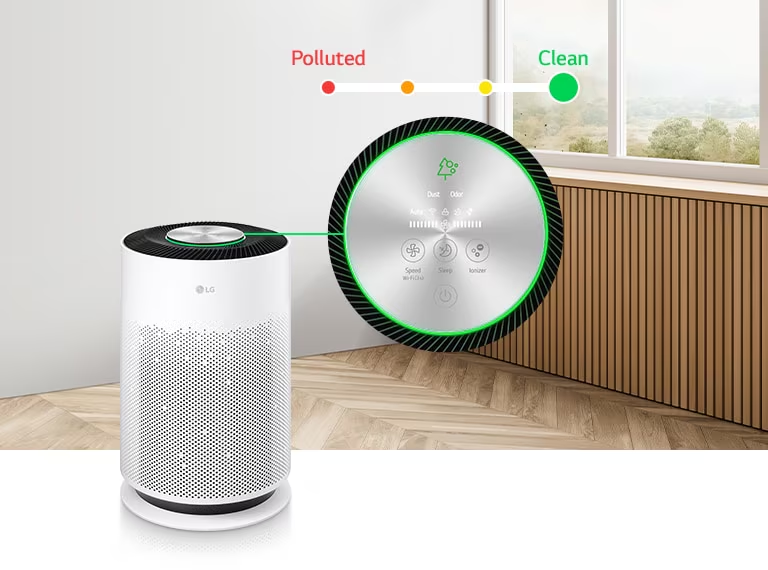
When haze returns, many households respond by closing windows, reducing outdoor activities and spending more time indoors. But does staying inside automatically mean the air in your home is clean? Not necessarily. Fine particles can still enter through doors, gaps and ventilation, which is why indoor air quality becomes especially important during haze season in Malaysia.
An air purifier for haze can help reduce airborne particles inside the room where it operates, particularly when it uses efficient particle filtration and is properly sized for the space. It is not a complete shield against outdoor pollution, but it can be a useful part of managing indoor air when haze conditions worsen.
So, do you actually need one? That depends on your home, how much time you spend indoors and how effectively you can limit polluted outdoor air from entering.
Haze contains fine airborne particles and other pollutants that can travel into buildings even when the doors and windows are mostly closed. Malaysia’s Ministry of Health advises keeping windows and doors shut during severe haze and notes that high-efficiency air filtration can help reduce fine particles indoors.
One of the main concerns is PM2.5, which refers to fine particulate matter measuring 2.5 micrometres or smaller. These particles are small enough to travel deep into the respiratory system, making them particularly relevant when haze conditions deteriorate.
Indoor conditions also depend on what happens inside your home. Cooking smoke, cigarettes, candles and other particle-producing activities can add to the air pollution already entering from outside.
That means closing the windows is important, but it may not always be enough on its own.
Yes, a properly selected air purifier can help reduce airborne particulate matter inside a room.
The purifier draws indoor air through its filtration system, traps particles in the filter and circulates the cleaned air back into the room. Malaysia’s Ministry of Health specifically recommends using an air purifier or air-cleaning device to help keep particulate levels lower indoors during haze conditions.
However, an air purifier haze setup works best when the rest of the home environment supports it. If windows are constantly open or the purifier is too small for the room, it may struggle to keep up with incoming pollution.
Think of the purifier as one layer of protection rather than a complete solution. Reducing outdoor air infiltration, limiting indoor smoke and using the purifier consistently all work together.
Not all airborne particles are the same size. During haze, fine particulate matter is especially important because smaller particles can remain suspended in the air for longer periods and are harder to control through simple cleaning alone.
This is why an air purifier for PM2.5 should use effective particle filtration rather than relying only on a basic fan or deodorising function.
When comparing purifiers, pay attention to:
A powerful purifier in the wrong-sized room may still underperform, so filtration and airflow should always be considered together.
An air purifier becomes especially useful when outdoor pollution is poor for extended periods and your household is spending more time indoors.
You may benefit from using one when:
Malaysia’s Department of Environment uses the Air Pollutant Index, or API, to communicate outdoor air-quality conditions from good through hazardous levels. Checking the API can help you decide when additional indoor precautions may be useful.
For many homes, the most practical approach is to place the purifier in the room where people spend the most time rather than trying to clean the entire property with one unit.
If haze protection is one of your main reasons for buying an air purifier, prioritise the fundamentals before extra features.
Look for:
Smart controls can also be useful, but they should complement good filtration rather than replace it.
An air purifier can help improve indoor air quality, but it should not be treated as a complete barrier against haze.
Outdoor pollution can still enter when doors are opened, through gaps in the building or through ventilation systems. Cooking, candles, smoking and certain other indoor activities can also introduce additional particles into the air.
The more practical approach is to treat purification as one part of your haze-season routine. Keep outdoor air infiltration as low as reasonably possible, monitor Malaysia’s Air Pollutant Index, reduce unnecessary exposure when conditions deteriorate and use an appropriately sized purifier to help control indoor airborne particles. Malaysia’s Department of Environment uses the API to communicate ambient air-quality conditions from good through hazardous levels.
In other words, a good purifier can make your indoor environment easier to manage during haze, but good haze habits still matter.
Even a good purifier can only work with the air that passes through it. During haze, keep windows and doors closed as much as practical when outdoor air quality is poor. This helps reduce the amount of polluted air the purifier needs to deal with.
Place the purifier where airflow is not blocked by curtains, furniture or walls. Avoid hiding it in a corner simply because it looks neater there.
It also helps to run the purifier consistently during prolonged haze rather than switching it on only when the air already feels unpleasant. Higher fan settings may be useful when particle levels rise, while quieter settings can be used once conditions improve or overnight.
Finally, check the filter regularly. A purifier working harder during haze may collect particles more quickly, so filter condition and replacement intervals should not be ignored.
During haze season, choosing an air purifier for haze with effective particle filtration can make a difference to your home’s indoor air quality. The LG PuriCare 360° HIT is a practical option for Malaysian households looking to reduce fine airborne particles, including PM2.5 associated with haze and smoke.
Its key features include:
These features make the LG PuriCare 360° HIT a well-rounded choice for households that want to manage indoor particles during Malaysia’s haze season.
While an air purifier cannot completely prevent outdoor pollution from entering your home, combining effective filtration with good haze-season habits can help maintain cleaner indoor air.
For more guidance on choosing a suitable purifier, explore our Best Air Purifier Malaysia for Haze Season guide, or view the LG PuriCare 360° HIT to learn more about its features.
An air purifier is not mandatory for every household, and it cannot completely prevent haze pollution from entering your home. But when outdoor air quality deteriorates, a properly sized purifier can help reduce airborne particles indoors and make it easier to manage the air in rooms where your family spends the most time.
Its value is greater when it is used alongside sensible haze precautions such as keeping windows closed, reducing indoor smoke sources and monitoring Malaysia’s API.
For households that regularly experience poor air quality during haze season Malaysia, an LG air purifier can be a practical addition to the home, particularly when fine-particle filtration, air-quality monitoring and reliable circulation are priorities.
Looking for an LG air purifier that suits your room and household needs? Contact LG PuriCareU to compare available models, LG Subscribe plans and current offers.